

If you own rural or wooded property in Texas, you've likely heard the terms "Brush clearing" and "Underbrush clearing" used interchangeably. While they're related, they're not quite the same job, and knowing the difference can save you time, money, and headaches when planning a land clearing project.
In this guide, we break down what each term means, how the process works, and why hiring an experienced contractor matters.
What Is Brush Clearing?
Brush clearing refers to removing dense woody vegetation such as shrubs, small trees, vines, and thickets that have taken over a property. This is typically a larger-scale effort aimed at reclaiming land for construction, agriculture, pasture, or fire prevention. Brush clearing often involves cutting, mulching, or grinding vegetation down to manageable debris or clearing it away entirely.
What Is Underbrush Clearing?
Underbrush clearing is a more targeted process. It focuses on the low-growing vegetation beneath a tree canopy, things like small saplings, weeds, tangled vines, and ground-level shrubs.
Rather than clearing an entire lot, underbrush clearing is often used to improve the health and appearance of an existing wooded area, reduce wildfire risk, and make trails or yards more accessible without removing the mature trees overhead.
Key Differences Between Brush Clearing and Underbrush Clearing
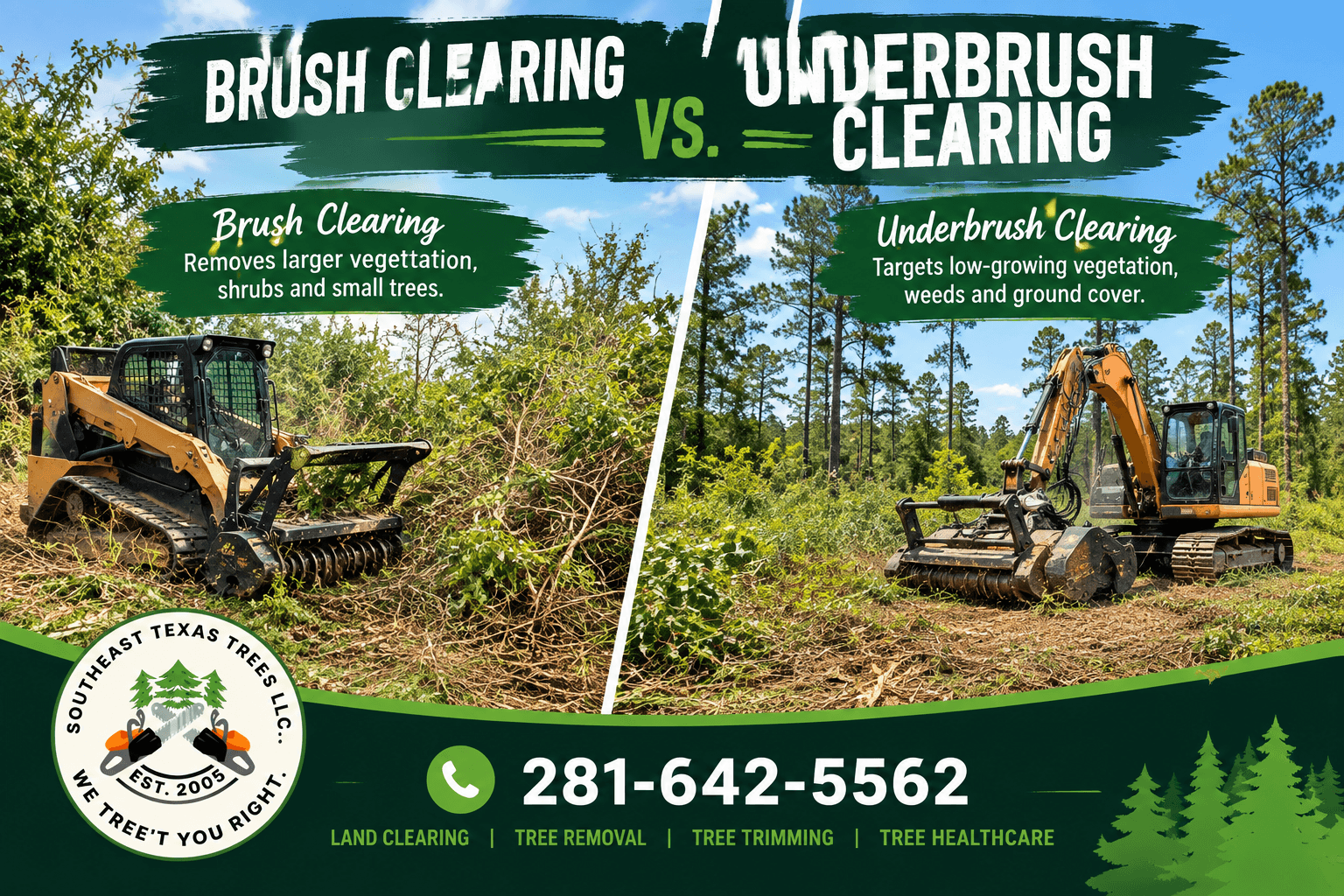
Scope: Brush clearing tends to cover larger areas and may involve full-site vegetation removal. Underbrush clearing is more selective, working around existing trees.
Purpose: Brush clearing is often step one in preparing land for building or farming. Underbrush clearing is about maintenance, safety, and aesthetics within a treed area.
Equipment intensity: Brush clearing may require heavier machinery for larger volumes of material, while underbrush clearing uses more precise tools to avoid damaging surrounding trees.
Understanding which service your property needs is the first step toward a successful project, and that's where a professional land clearing team makes all the difference.
Land Clearing Methods
Property owners typically choose from a few proven approaches:
Forestry mulching: Grinds brush and small trees into mulch on-site, which also enriches the soil.
Mechanical clearing: Uses excavators, skid steers, or dozers to remove larger vegetation and debris.
Selective clearing: Removes unwanted growth while preserving healthy, mature trees.
Controlled burns: In some cases, a permitted burn helps manage overgrown underbrush, though this requires strict regulatory approval in Texas.
The right method depends on your property's size, terrain, and end goal, whether that's a build site, pasture, or a healthier wooded lot. Read more about Land Clearing tips here.
Equipment and Technology
Modern land clearing relies on specialized equipment like forestry mulchers, track-mounted skid steers, and excavators fitted with mulching or grapple attachments. This equipment allows crews to clear dense vegetation efficiently while minimizing soil disruption and protecting trees you want to keep.
Technology like GPS mapping and drone surveys is also increasingly used to plan clearing projects with precision, especially on larger acreage.
Choosing a Contractor
Not all land clearing companies are equal. When hiring a contractor in Southeast Texas, look for:
Proper licensing and insurance
Experience with both brush and underbrush clearing
The right equipment for your property's terrain
Clear, upfront pricing and a written estimate
Local knowledge of Texas soil, vegetation, and permitting requirements
A reputable, local contractor will assess your land, recommend the right approach, and complete the work safely and efficiently.
Why Choose Southeast Texas Trees
At Southeast Texas Trees, we specialize in both brush clearing and underbrush clearing across Southeast Texas. Whether you're prepping raw land for a new build, opening up pasture, or simply want a healthier, more accessible wooded property, our experienced crew has the equipment and expertise to get the job done right. Our full range of land clearing services is designed to fit projects of every size, from small residential lots to large acreage.
Ready to reclaim your land? Call 281-642-5562 today for a FREE quote, and let our team help you decide the best clearing approach for your property.
Conclusion
Brush clearing and underbrush clearing may sound similar, but each serves a distinct purpose. Brush clearing is about large-scale vegetation removal to prepare land, while underbrush clearing focuses on maintaining and improving existing wooded areas. Knowing which one your property needs is the key to a smooth, cost-effective project, and partnering with an experienced local contractor ensures it's done safely and correctly.
FAQs - Frequently Asked Questions:
1. How do I know if I need brush clearing or underbrush clearing? If you're preparing a lot for construction or farming, you likely need brush clearing. If you want to maintain a wooded area or reduce fire risk while keeping mature trees, underbrush clearing is the better fit.
2. Is underbrush clearing harmful to my trees? No. When done correctly, underbrush clearing actually improves tree health by reducing competition for water and nutrients and lowering the risk of wildfire spreading through dense ground cover.
3. How much does land clearing cost in Southeast Texas? Costs vary based on acreage, terrain, vegetation density, and the clearing method used. Contact Southeast Texas Trees at 281-642-5562 for a free, no-obligation quote.
4. Do I need a permit to clear land in Texas? Permit requirements vary by county and whether burning is involved. A local, experienced contractor can help you navigate local regulations before work begins.
