

Trees add beauty, shade, and value to residential and commercial properties, but they need proper maintenance to remain healthy and safe. Two common tree care services are tree pruning and tree trimming. Although people often use these terms interchangeably, they serve different purposes.
Understanding tree pruning vs. tree trimming can help property owners choose the right service for their trees. Whether you need to remove diseased branches, manage overgrowth, improve your landscape's appearance, or reduce storm-related risks, knowing the difference can help you make an informed decision.
Southeast Texas Trees provides professional tree care services for property owners in Conroe, The Woodlands, Montgomery County, and surrounding Southeast Texas communities. With the right maintenance plan, you can protect your trees, improve your property's appearance, and address potential hazards before they become bigger problems.
What Is the Difference Between Tree Pruning and Tree Trimming?
Although the terms are often used interchangeably, the main difference lies in the purpose of the work. Pruning generally focuses on tree health and structure, while trimming typically focuses on appearance, size, and clearance.
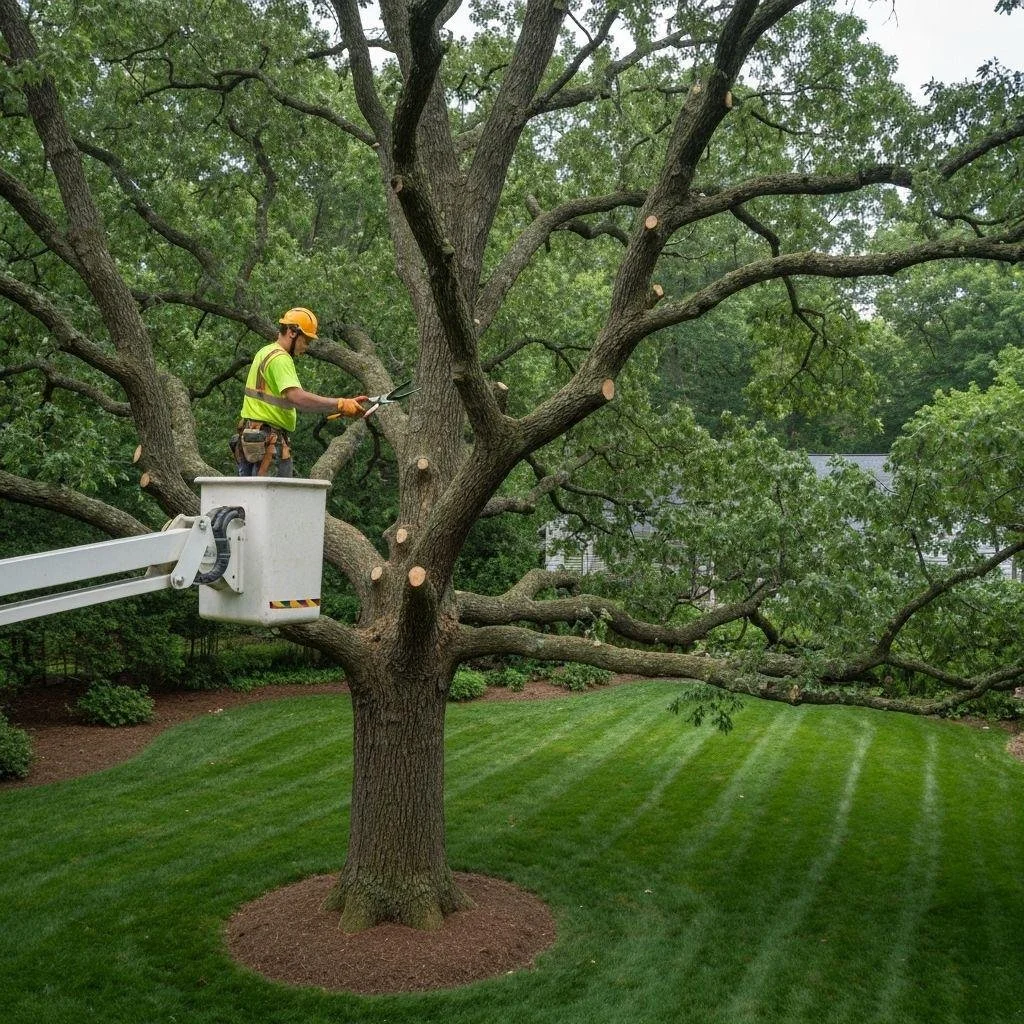
Tree Pruning
Tree pruning involves selectively removing dead, diseased, damaged, crossing, or structurally weak branches. It helps maintain healthy growth, improve branch structure, and reduce potential hazards.
Best for: tree health, disease management, structural improvement, and safety.
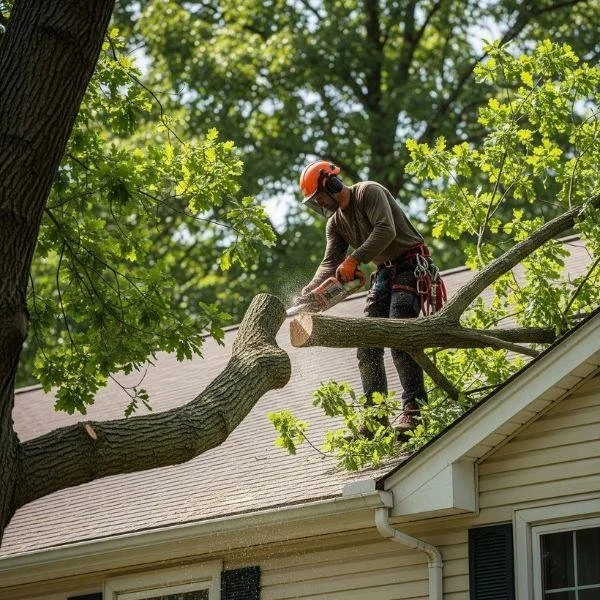
Tree Trimming
Tree trimming typically manages overgrown branches, improves the tree's shape, and maintains clearance around roofs, driveways, walkways, and other structures.
Best for: appearance, size management, clearance, and landscape maintenance.
Both services can improve safety and appearance when performed correctly. In practice, a single tree care visit may include both trimming and pruning, depending on the tree's condition and your goals.
For more details about pruning techniques and tree health, read our Tree Pruning Guide.
Which Is More Important: Tree Pruning or Tree Trimming?
Neither service is universally more important. The right choice depends on the tree's condition and the property's needs.
Tree pruning should be the priority when a tree has dead or diseased branches, weak branch connections, crossing limbs, or structural problems that could affect its health or safety.
Tree trimming may be the priority when branches are overgrown, interfere with walkways, approach the roof, obstruct visibility, or make the landscape look unkempt.
For example, a mature oak with a dead branch hanging above a driveway needs targeted pruning to address the hazard. A tree with healthy but overextended branches crowding a building may need trimming to improve clearance.
In Southeast Texas, where strong winds, heavy rainfall, and tropical storms can place additional stress on trees, regular inspections and preventative maintenance are especially valuable.
The best approach is to have a professional assess the tree and recommend the appropriate work rather than requesting unnecessary cutting. Excessive pruning can weaken trees and create long-term structural problems.
Tree Pruning vs. Tree Trimming Costs in Southeast Texas
The cost of tree pruning and trimming varies depending on tree height, species, condition, accessibility, the amount of work required, and whether specialized equipment is needed.
The following figures are general budgeting estimates, not fixed local quotes. Actual prices in Conroe, The Woodlands, and surrounding communities may differ.
Based on Service or tree size, estimated costs are:
Small tree pruning or trimming
$150–$300
Medium tree pruning or trimming
$300–$600
Large tree or complex work
$600–$1,000+
These ranges are indicative; complex jobs involving hazardous limbs, restricted access, extensive canopy work, or specialized equipment can cost more. Local tree service pricing also varies substantially by project scope.
What Affects the Price?
Tree size and height: Larger trees often require more labor and equipment.
Tree condition: Dead, diseased, or storm-damaged limbs may require additional precautions.
Accessibility: Trees near buildings, fences, or utility lines can be more challenging to service.
Scope of work: Selective pruning and basic shaping may take less time than extensive canopy work.
Debris cleanup: Chipping, hauling, and disposal may affect the final estimate.
Pruning is not automatically more expensive than trimming, or vice versa. The actual work required matters more than the service label. Requesting a written estimate that specifies the planned cuts, cleanup, and any additional services will help you compare quotes fairly.
When Should You Schedule Tree Pruning or Trimming?
Timing depends on the tree species, its health, and the reason for cutting.
Routine pruning: Often scheduled during a suitable dormant period, depending on the species.
Clearance trimming: Scheduled when branches interfere with buildings, driveways, or walkways.
Dead or hazardous branches: Addressed promptly when safe to do so.
Storm-damaged trees: Assessed as soon as conditions allow safe inspection.
Oak trees require special consideration in Texas because oak wilt can spread through certain pruning wounds during periods of beetle activity. Ask a qualified tree care professional about appropriate timing for your specific trees. Do not delay urgent hazard management simply to follow a routine seasonal schedule.
Professional Tree Trimming Services from Southeast Texas Trees
Choosing the right tree care provider can help protect your landscape and avoid damage caused by improper cutting. Southeast Texas Trees offers professional tree trimming and related tree care services for homeowners and businesses in Conroe, The Woodlands, Montgomery County, and surrounding Southeast Texas communities.
Services can help address overgrown branches, improve clearance around structures, maintain tree appearance, and manage potential hazards. When a tree needs more than routine trimming, a professional assessment can help determine whether pruning, additional tree healthcare, or removal is the appropriate solution.
Explore our Tree Trimming Services to learn more and request a quote.
Conclusion
Understanding tree pruning vs. tree trimming helps you make better decisions about tree health, safety, and landscape maintenance. Pruning focuses primarily on removing problematic branches and improving tree structure, while trimming generally manages overgrowth, shape, and clearance.
Both services play an important role in maintaining healthy trees and protecting your property. The most effective maintenance plan depends on the tree species, condition, location, and specific risks.
For professional tree care in Conroe, The Woodlands, and surrounding Southeast Texas areas, contact Southeast Texas Trees to discuss your needs.
Call 281-642-5562 to request a quote or schedule a tree care appointment.
Frequently Asked Questions
1. Is tree pruning the same as tree trimming?
Not exactly. Pruning generally focuses on tree health, structure, and removing dead or diseased branches, while trimming typically focuses on shaping, managing overgrowth, and maintaining clearance. Many tree care projects involve both.
2. Is tree pruning more expensive than tree trimming?
Not necessarily. Costs depend on the tree's size, condition, location, accessibility, and the complexity of the work. Ask for a written estimate that explains the scope of the proposed service.
3. Where can I get professional tree trimming in Southeast Texas?
Southeast Texas Trees provides tree trimming and related tree care services in Conroe, The Woodlands, Montgomery County, and surrounding areas. Visit our tree trimming service page or call 281-642-5562 to request a quote.
