

Land clearing is an important first step for many Texas property improvement and development projects. Whether you are preparing a lot for a new home, expanding a commercial property, reclaiming overgrown land, or improving a rural property, proper clearing creates a safer and more usable space.
However, land clearing in Texas involves more than removing trees and brush. The right approach depends on the size of the property, vegetation density, terrain, intended use, environmental considerations, and local requirements. Professional planning can help property owners avoid unnecessary damage, delays, and expenses.
Southeast Texas Trees provides professional land clearing services for property owners throughout Conroe, The Woodlands, Montgomery County, TX, and surrounding areas, helping prepare properties efficiently while preserving valuable trees and minimizing unnecessary disturbance.
Learn more about our Land Clearing Services in Texas and contact Southeast Texas Trees for a free quote here 📞 Call 281-642-5562.
Why Is Land Clearing Important in Texas?
Overgrown vegetation can make property difficult to use, maintain, or develop. Trees, brush, stumps, and unwanted vegetation may also interfere with construction, driveways, drainage, fencing, and landscaping.
Professional land clearing can help:
Prepare property for residential construction
Create access roads and driveways
Reclaim overgrown acreage
Improve property appearance
Remove hazardous vegetation
Prepare commercial development sites
Improve access to agricultural or recreational land
Proper clearing also allows property owners to determine which trees should be preserved and which vegetation needs to be removed.
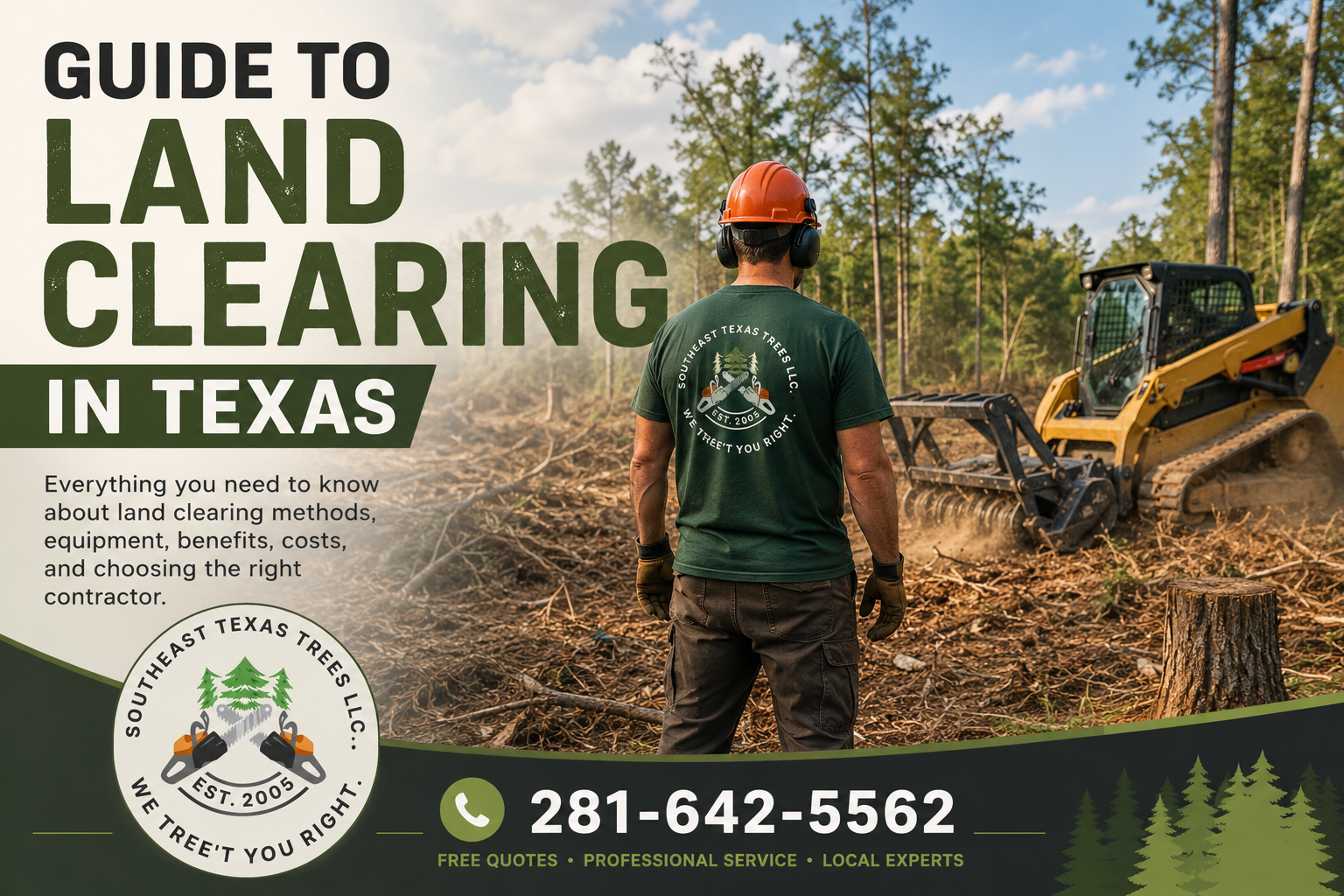
Key Advantages of Professional Land Clearing
1. Prepares Land for Construction
Before building a home, commercial structure, driveway, or other improvement, the property may need to be cleared of trees and dense vegetation. Proper site preparation creates a more workable foundation for subsequent construction activities.
2. Improves Property Accessibility
Dense brush and unmanaged vegetation can make portions of a property difficult to access. Clearing can create pathways, equipment access, driveways, and usable outdoor areas.
3. Reduces Safety Hazards
Dead trees, unstable limbs, thick brush, and overgrown vegetation can create hazards for property owners and visitors. Professional clearing helps identify and remove potentially dangerous vegetation.
4. Supports Better Property Management
Clearing selected areas can make mowing, landscaping, fencing, drainage maintenance, and other property management tasks easier.
5. Protects Valuable Trees
Professional land clearing does not always mean removing everything. Selective land clearing can preserve mature, healthy, or strategically valuable trees while removing unwanted vegetation around them.
Land Clearing Methods
The appropriate land clearing method depends on the property and the desired outcome. Common techniques include forestry mulching, traditional cut-and-haul clearing, and heavy-equipment clearing.
Forestry Mulching
Forestry mulching uses specialized machinery to grind trees, brush, and vegetation into mulch that remains on the ground.
This method can be useful when property owners want to clear vegetation while leaving organic material behind. The resulting mulch can help protect exposed soil and reduce erosion.
Traditional Clearing
Traditional clearing involves cutting vegetation and removing or stacking the resulting debris. This approach may be appropriate when the property needs to be completely cleared and debris removed from the site.
Excavator or Dozer Clearing
Heavy equipment such as excavators and bulldozers may be appropriate for larger properties, dense vegetation, substantial trees, or projects that require additional site preparation.
The best method should be determined after evaluating the property rather than selecting a technique based solely on price.
Land Clearing Equipment and Technology
Professional contractors use specialized equipment to make clearing projects safer and more efficient.
Depending on the project, equipment may include:
Forestry mulchers
Skid steers
Excavators
Bulldozers
Chainsaws
Stump grinders
Brush cutters
Dump trucks
Forestry mulching equipment, for example, can process vegetation directly on the property, while excavators and bulldozers can handle larger trees, heavy brush, and difficult terrain.
The right equipment can significantly affect project efficiency, cleanup requirements, and overall cost.
How to Choose a Land Clearing Contractor
Choosing the right contractor is one of the most important decisions in a land clearing project.
Before hiring a company, consider:
Experience
Look for a contractor with experience handling projects similar to yours, whether residential, commercial, agricultural, or acreage clearing.
Insurance
Ask for proof of appropriate insurance coverage before work begins.
Equipment
A professional contractor should have access to equipment appropriate for the property's vegetation, terrain, and project requirements.
Written Estimate
Request a detailed quote explaining what is included, such as vegetation removal, stump work, debris disposal, and cleanup.
Local Knowledge
A contractor familiar with Texas conditions can better understand local vegetation, weather, soil conditions, and project considerations.
Consider Permits and Environmental Factors
Land clearing requirements can vary depending on the location, project type, and local regulations. Property owners should determine whether permits, tree protections, development requirements, or environmental restrictions apply before starting significant clearing work.
Environmental considerations are also important. Removing vegetation can expose soil to erosion and affect drainage or wildlife habitat. Responsible clearing focuses on removing what is necessary while protecting valuable trees and minimizing unnecessary disturbance.
When Is the Best Time for Land Clearing in Texas?
Land clearing can generally be performed throughout the year, but seasonal conditions can affect efficiency.
Late fall and winter often provide favorable working conditions because vegetation may be less active and temperatures are generally more comfortable for crews and equipment operators.
However, the best timing ultimately depends on the property, weather, vegetation, construction schedule, and project goals.
Professional Land Clearing in Southeast Texas
Southeast Texas Trees provides professional land clearing services in Conroe, The Woodlands, Montgomery County, TX, and surrounding communities.
Our team can help property owners evaluate their land and determine the most practical approach for removing unwanted trees, brush, and vegetation.
Along with land clearing, Southeast Texas Trees provides tree removal, tree trimming, and tree healthcare services, giving property owners access to comprehensive tree care from one local provider.
If you are preparing a property for construction, reclaiming overgrown land, or simply making your acreage safer and more usable, professional land clearing can make the process considerably easier.
Conclusion
Land clearing is an important part of property development, maintenance, and improvement throughout Texas. Choosing the right method, equipment, timing, and contractor can make a significant difference in the final result.
Whether your project requires selective clearing, forestry mulching, brush removal, or larger-scale vegetation removal, professional planning helps protect the property while achieving your goals.
Ready to clear your Texas property? Contact Southeast Texas Trees for professional land clearing and tree services in The Woodlands, Conroe, Montgomery County, and surrounding areas.
📞 Call 281-642-5562 today for a FREE quote or to schedule an appointment.
FAQs About Land Clearing in Texas
1. What is land clearing?
Land clearing is the process of removing unwanted trees, brush, vegetation, and other obstacles from a property. It can prepare land for construction, agriculture, landscaping, access roads, or general property improvement.
2. What is the best method for clearing land in Texas?
There is no single best method for every property. Forestry mulching, traditional clearing, and heavy-equipment clearing each have different applications, so the right method depends on vegetation, terrain, acreage, and the property's intended use.
3. Do I need a permit for land clearing in Texas?
Permit requirements can vary by city, county, property type, and project. Property owners should check applicable local requirements before beginning significant tree or land clearing work.
4. How much does land clearing cost in Texas?
The cost depends on acreage, vegetation density, terrain, accessibility, clearing method, and whether services such as stump removal or debris hauling are required. A professional site assessment is the best way to obtain an accurate estimate.
5. Can land clearing preserve some trees?
Yes. Selective land clearing can remove unwanted brush and trees while preserving healthy, mature, or strategically important trees. A professional assessment can help determine which vegetation should remain.
